
By Samantha Davidson Green, JAM Executive Director
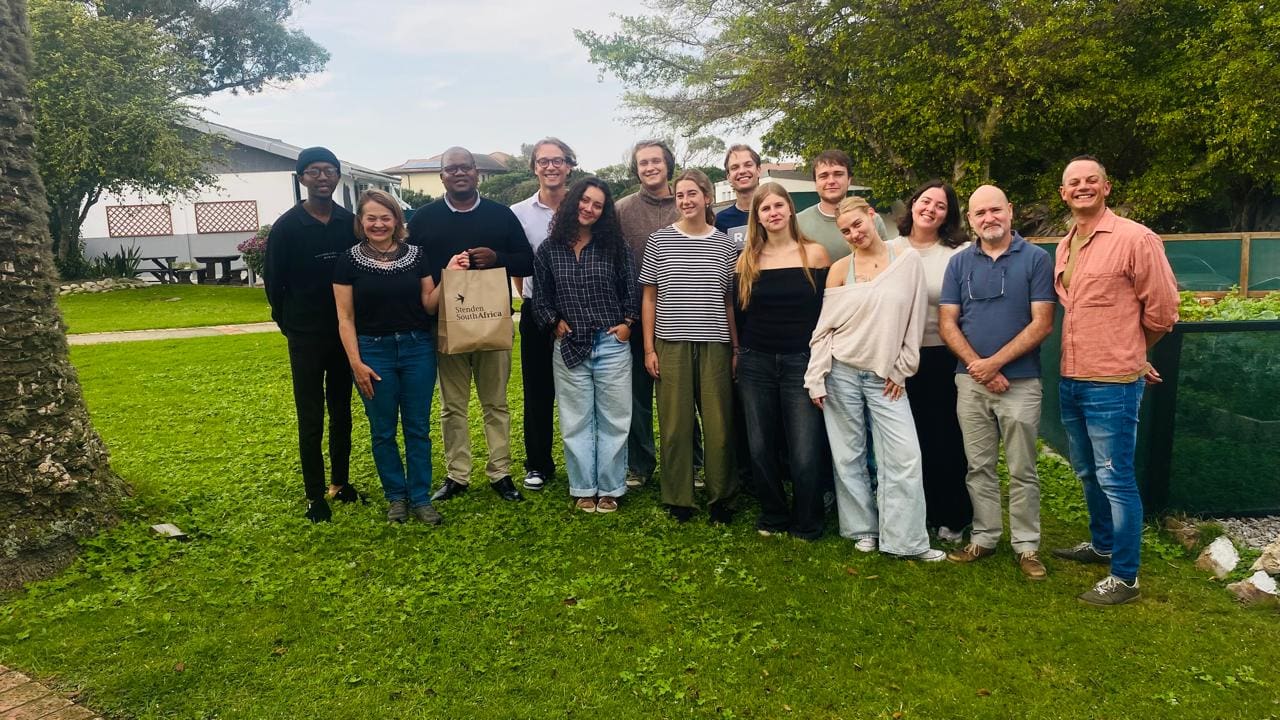
With support from the Joyful Living Fund and two host universities, this May I had the opportunity to represent JAM in South Africa as a guest presenter on the topic of “Digital Storytelling for Social Change”. At the University of the Free State Qwaqwa campus, I joined South African Community Development undergraduates growing their digital storytelling skills to advance NGOs’ reach and impact in their region. At Stenden South Africa, a Dutch university with a campus in Port Alfred, Eastern Cape, I joined a class of mostly European students seeking ethical, culturally sensitive documentary skills to support international development efforts.
These partnerships have given the JAM staff and me the chance to reflect more deeply on our work and mission at JAM. Prior to my visit, the JAM staff and I made remote presentations weekly to the Community Development students in Qwaqwa. Professor Nthatisi Nkoebele and I coordinated topics from JAM’s relevant experience in the Upper Valley to align with her curriculum, such as:
- Documenting Community Development Success Stories with JAM Producer Mike Cannon capturing Lebanon High School’s “Take Flight” program over several years
- Elevating Marginalized Voices – Emerging Filmmakers with JAM Media Education Coordinator Noah Mauchly
- Community-building through Podcasting with Jeff Backus (HireAbility)
- Digital Storytelling for Fundraising and Volunteer Recruitment with Chico Eastridge and Jordyn Lich
Over the winter, our conversations and relationships with the UFS students and faculty deepened into rich cross-cultural comparisons, discoveries, and open-ended questions about our change goals, our media methods, how to support vulnerable populations without creating more risk exposure, access, and equity.
I harbored a fascination with South Africa for decades before this trip, my first to Sub-Saharan Africa. In the 1990s while I was teaching public school in Mississippi in my first job after college, we all watched as the structures of Apartheid gave way to a new democracy. Student protests against Apartheid had shaped my coming-of-age, and the hope of the moment’s success was welcome as this New Englander was awakening to the entrenched structures of segregation in Mississippi (and the US). As I saw it, my job as an English teacher was to help students “find their voices” as writers, performers, and orators and to access stories that would change their consciousness – and the world’s. So in a sense, “storytelling for change” has been the throughline of my life’s work leading to my current role at JAM, and South Africa has been an inspiration all along.
JAM’s current collaboration began last summer at the Community Development Society Annual Conference in Geneva, NY where JAM was invited to present on behalf of the state of Vermont’s Better Places “crowdgranting” program that helped launch our current incarnation of 2022. There I met a group of academics from South Africa presenting a new curriculum module they had developed titled “Digital Storytelling for Social Change.” I sensed we would find a lot to talk about… Indeed, colleagues Juliet Chipamuro (Academic Dean, Stenden South Africa), Prof. Wilson Majee (Univ. of MO, Public Health), and I began an energetic conversation that turned into biweekly Zoom meetings over many months – with more colleagues joining, including Prof. Grey Magaiza (UFS Qwaqwa) and Mzameli Dikeni (Stenden) – and eventually to my arrival in Johannesburg the evening of May 9.
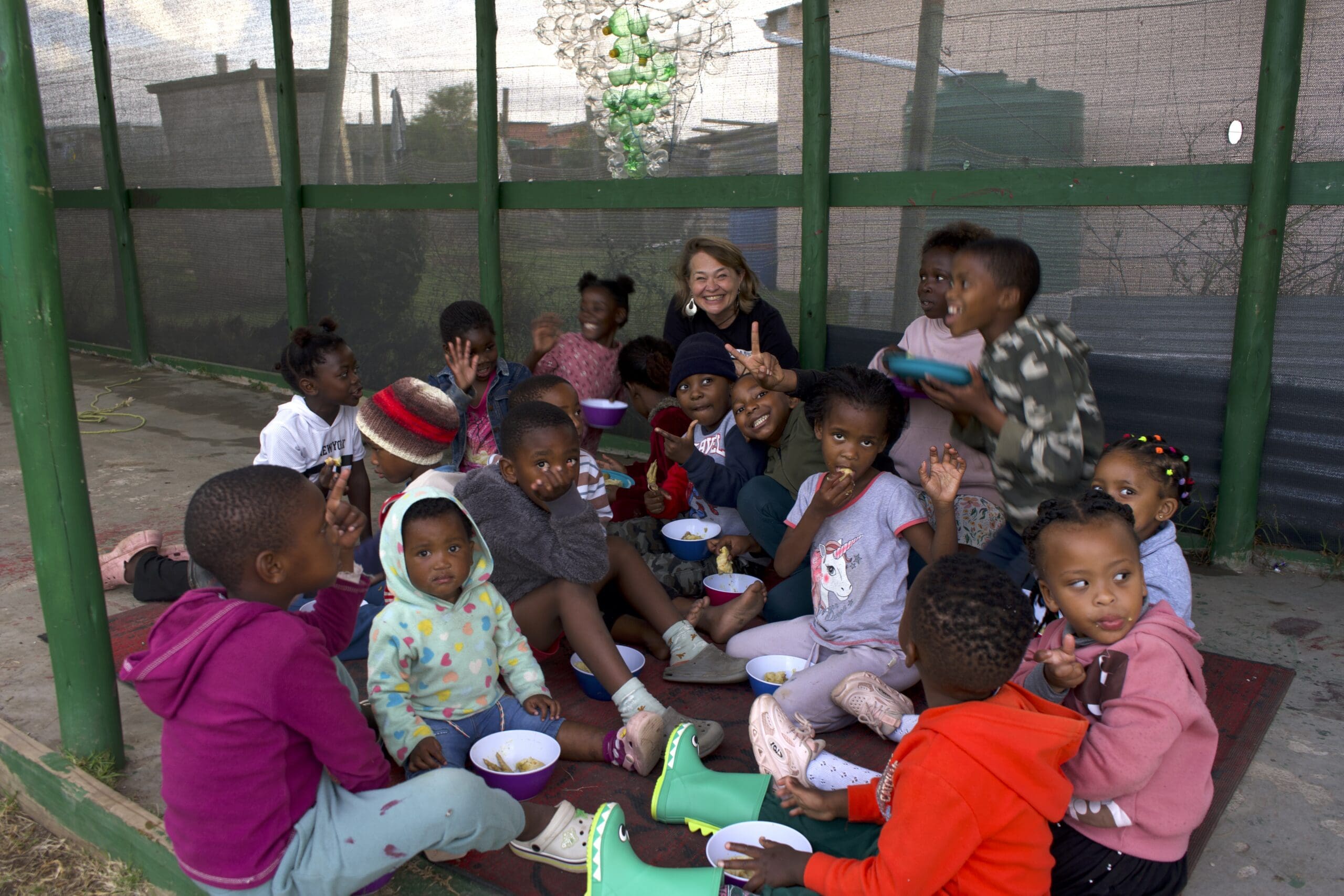
The goals of my visit included hands-on filmmaking workshops in the field with students, guest presentations with faculty, and relationship-building to grow the partnerships, if they continue to provide mutual benefit. I spent the first week on the UFS Qwaqwa campus near the city of Phuthaditjhaba, a beautiful mountainous region near Lesotho. We visited two NGO social services providers in the field, documenting their work and the students’ learning process. I also facilitated a day-long workshop with 25 NGO leaders on campus. From there, I traveled to the Eastern Cape where I followed students on repeated visits to Nemato Township as they established relationships with clients for digital story projects under the direction of Prof. Dikeni and Rhodes University’s Social Innovation Hub leader Thandi Matyobeni. My hosts kindly fit some local attractions into packed itineraries, including a visit to Golden Gate Highlands Park in the Maluti Mountains and the Addo Elephant National Park near Gqeberha. I was even invited to present on “Digital Storytelling and Disaster Management” to Stenden’s Disaster Relief Management students – a subject I know nothing about, yet we found lots of common ground by exploring how Hollywood handles disaster stories! It was an extraordinary and (needless to say) life-changing two weeks that I documented in various ways, which I share here.
Among the many insights gathered on this trip, one moment stands out. Stenden teaching assistant and Rhodes Univ. Journalism graduate Masi Viti studied JAM’s website very carefully and shared the following observation: “You record your local government meetings. This is incredible. Our meetings are not recorded, and people have no way to find out what their elected officials are actually doing. It would be incredible to have such a system here.” Corruption is a real challenge for South Africa, with visible consequences on the landscape where promised housing projects and economic development stall as dedicated funds are siphoned by politicians. Masi sent me home with a powerful renewal of purpose for our work as a nonprofit community media organization and solidarity with our international colleagues dedicated to uplifting their communities.
There are many ways these partnerships could develop, including hosting a South African community media intern here at JAM, a follow-up trip to South Africa for more JAM staff, remote co-productions and instruction, and more. I believe cross-cultural experiential learning not only awakens consciousness at individual and local levels but uniquely stimulates creativity for collective problem-solving needed on a global scale.
I’d love to hear what you, our JAM community, imagine for how this partnership and others like it could further expand our capacity to achieve social change through digital storytelling. Please email your ideas to me at .
With deepest thanks to the Joyful Living Fund, the University of the Free State Qwaqwa, and Stenden South Africa.
Photos